Bootstrap Island VR Review: The Best Survival Game on Quest?
Disclosure: As an Amazon Associate, Bytee earns from qualifying purchases.
Your hands are shaking — not because of haptics, but because you have been crouching over a bow drill for three real minutes, spinning a wooden spindle between your palms, watching a tiny ember glow to life in the tinder bundle, knowing that if you fumble the transfer to the firepit you will spend another night freezing on a dark island beach. This is Bootstrap Island VR in its purest form: a survival experience that strips away UI shortcuts, tutorial hand-holding, and casual comfort to deliver something rare in 2026 — a VR game that treats your presence on screen as genuinely, physically real.
What Is Bootstrap Island and Who Is It For?
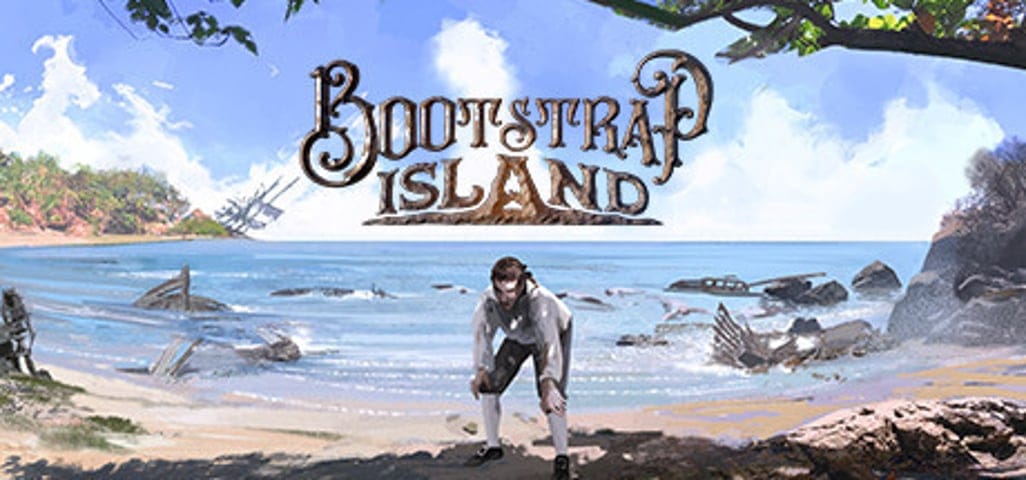
Bootstrap Island VR is a solo-player, stranded-island survival simulator developed by Maru VR and released in 1.0 form across Meta Quest 2, Quest 3, Quest 3S, and Steam VR platforms. Priced at $27.99, it positions itself as a hardcore immersive-sim alternative to the casual survival games flooding the VR storefront. You wake up on a beach with nothing. Your goal is to survive long enough to figure out why you’re there — and whether escape is even possible.
This game is built for a very specific audience: VR veterans who crave tactile, physics-based interaction over narrative spectacle; immersive-sim fans who loved games like Outer Wilds or the original Thief for their respect of player agency; and survival enthusiasts willing to learn through failure and environmental discovery rather than quest markers and tooltips. If you’re looking for multiplayer camaraderie, casual pick-up-and-play sessions, or a story-driven campaign with character arcs, Bootstrap Island will frustrate you immediately. If you’re the type of gamer who spends 45 minutes optimizing a base layout in Valheim, or who finds joy in the methodical repetition of resource gathering, this is your game.
The estimated playtime for a first survival arc is 10–15 hours, though permadeath runs and challenge modes extend that significantly. Bootstrap Island is not a game you finish and shelve; it’s a game you return to, die in, learn from, and retry with hard-won knowledge.
Gameplay & Core Mechanics: What You Actually Do
The core loop is deceptively simple: gather materials, craft tools, hunt or forage for food, collect water, maintain shelter, sleep, repeat. What makes Bootstrap Island distinct is that every single step of this loop requires your actual hands and physical presence. There are no menus. There are no button-press shortcuts. When you need to make a fire, you pick up a bow drill kit, position the wooden spindle against the fire board, and physically perform the spinning motion for 30–60 seconds until friction generates enough heat to ignite tinder. When you need a sharp edge, you knap flint by striking stone against stone with precise hand angles. When you need a basket, you weave it by hand, threading plant fibers through a wooden frame in real-time.
This design philosophy is the game’s greatest strength and its steepest barrier to entry. The satisfaction of creating fire through your own physical effort is visceral and immediate in ways that menu-based crafting can never replicate. Your body remembers the motion. Your hands develop muscle memory. The survival mechanics feel earned rather than performed.
Physical Crafting System: Flint Knapping, Bow Drill, and Weaving
Every craftable item in Bootstrap Island demands a specific hand motion or sequence. Flint knapping requires you to hold a stone steady in one hand while striking it at the correct angle with another — miss the angle and you waste materials. Bow drill fire-starting demands sustained, consistent spindle pressure and rotation speed; too fast and the friction becomes friction without heat, too slow and the ember dies. Basket weaving requires you to thread individual fibers through a frame, one at a time, with no undo button if you make a mistake. Water collection involves physically cupping your hands under streams or positioning containers during rainfall, then carrying them back to your shelter base without spilling. Shelter building requires you to place wooden frames, lash them together with cordage, and layer insulation — each structure is a 3D puzzle you solve with your hands.
The immersion payoff is extraordinary. You are not watching an animation; you are performing the action. However, the frustration ceiling is real. Players with smaller hands or limited play space (standing room) will find certain crafting tasks genuinely difficult or impossible. The game does not offer alternative input methods or scaled-down versions of these interactions. If you physically cannot perform a bow drill motion in your play space, you cannot make fire. This is a design choice, not a bug — but it is a dealbreaker for accessibility.
Survival Mechanics: Hunger, Thirst, Warmth, and Permadeath Consequences
Bootstrap Island layers four core survival needs: hunger, thirst, warmth, and exhaustion. Each depletes at a realistic rate. You cannot ignore hunger for two in-game days; you will collapse and die within 4–6 hours of playtime. Thirst is faster — you can dehydrate in under 2 hours if you’re not actively collecting rainwater or drinking from streams. Temperature matters. If you’re wet and exposed to wind on the island’s northern shore at night, your body temperature drops. Without a fire or shelter, you will freeze to death within 30 minutes of real time. Food spoilage is a secondary concern: raw meat left in the sun will rot within 4 in-game hours, forcing you to either cook it immediately or store it in a cool location.
The genius of this system is that it never feels arbitrary. You understand why you’re cold — you’re soaked from rain and you’re outside at night. You understand why you’re hungry — you spent the last two hours gathering wood and haven’t eaten. The game teaches you through consequence, not explanation. Permadeath mode intensifies this: when you die, your character is gone. Your shelter remains, your crafted tools remain, your progress remains — but you start over as a new survivor, forced to rebuild from scratch or scavenge the island for items left behind. This creates psychological tension that casual survival games cannot match. You stop taking risks. You plan routes obsessively. You sleep in shelter even when you feel safe, because one mistake means hours of work lost. The first time you die of hypothermia, you learn that shelter matters. The second time you starve because you spent too long on a single task, you learn to prioritize food gathering. This is punishing design, but it is fair. The rules are consistent. Once you internalize them, the survival loop becomes meditative rather than frustrating.
Story, World & Presentation
Bootstrap Island does not have a traditional narrative. There is no quest log, no NPC dialogue trees, no story missions with checkpoints. What it has is environmental storytelling and minimal narrative scaffolding. You wake up on the beach. There are journals scattered across the island — fragmented logs from previous inhabitants or castaways. These journals never explain the island’s purpose outright; instead, they hint, contradict, and suggest. The mystery deepens as you explore, but the game never resolves it explicitly. You are left to form your own conclusions, which is either refreshing or frustrating depending on your tolerance for ambiguity.
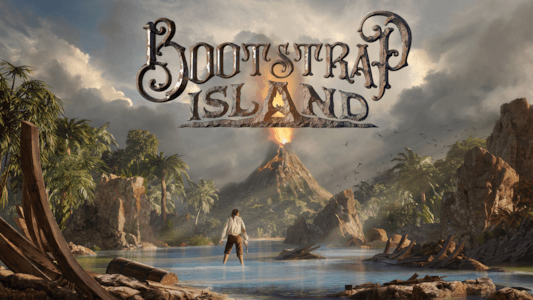
The island itself is the real narrative. It is divided into distinct biomes — dense jungle with fruit-bearing trees, rocky northern cliffs with seals and driftwood, a freshwater river valley, and a mysterious structure partially buried in sand. Each area has its own resource profile and environmental challenges. The jungle is humid and warm but dense with insects and predators. The cliffs are exposed to wind and cold but rich with stone and shells. This design encourages exploration and adaptation. You cannot survive on the beach alone; you must venture inland, learn the terrain, understand where resources cluster, and plan your routes accordingly.
Visually, Bootstrap Island is grounded and naturalistic rather than stylized. On Quest 3, the environment is detailed: individual leaves render clearly, water reflects light realistically, and the draw distance is impressive for standalone hardware. On Quest 2, the visuals are noticeably muddier — textures lack clarity and pop-in is visible at medium distance. The art direction is consistent across platforms, though: no cartoonish oversaturation, no fantasy elements, just a realistic island with realistic survival mechanics. The ambient sound design is exceptional. Wind carries directional information. Rain sounds different depending on whether you’re inside shelter or exposed. Animals vocalize — seals bark, birds call, insects chirp. The soundscape creates a sense of place that visual fidelity alone could not achieve. Frame rate is stable at 1.0 launch, maintaining 90 FPS on Quest 3 and 72 FPS on Quest 2 during normal play, with minor dips during heavy fire rendering.
Content, Length & Replayability
A first playthrough of Bootstrap Island’s main survival arc runs 10–15 hours, depending on how quickly you master the core mechanics and how efficiently you gather resources. This is not a long game by traditional standards, but it is a dense game. Every hour teaches you something new. The early hours are panicked and chaotic — you’re learning how to make fire, how to find water, where food sources are. By hour 8, you’ve established a routine. By hour 12, you’re optimizing. By hour 15, you’re either solving the island’s central mystery or deliberately extending your survival as a personal challenge.
Replayability is tied to self-imposed challenge runs rather than procedural generation or branching narratives. The island layout is fixed, so subsequent playthroughs follow the same geography. However, Maru VR has included a permadeath mode that fundamentally changes the psychological texture of the game. Your first run is about learning. Your second run, with permadeath enabled, is about proving you’ve learned. The stakes shift from exploration to optimization. You know where resources are, so you can plan efficient routes. You know the dangers, so you can prepare. This transforms Bootstrap Island from a 15-hour game into a 15-hour-per-run game that you’ll return to dozens of times if the core loop clicks for you.
At launch, Bootstrap Island does not support multiplayer or co-op. This is a significant limitation for players who want to share the survival experience with friends. Maru VR has announced a development roadmap that includes potential multiplayer features, but nothing is confirmed for release timing. There is no paid DLC announced, though the roadmap suggests free content updates are planned. The sandbox mode — essentially a creative survival without permadeath — extends the game’s life for players interested in base-building optimization without survival pressure.
Flaws, Frustrations & Red Flags
Bootstrap Island is exceptional at what it does, but it has genuine flaws that will alienate specific player types. The first and most obvious: the complete absence of multiplayer or co-op at launch. For a survival game, this is a notable omission in 2026. Survival games thrive on shared struggle and collaborative problem-solving. Playing Bootstrap Island solo is meditative and immersive, but it is also isolating. If you were hoping to survive an island with a friend, you will be disappointed. The developer has hinted at future multiplayer support, but nothing is concrete, and buying the game now with the expectation of co-op later is risky.
The second flaw is the near-total absence of onboarding. Bootstrap Island throws you into the world with minimal instruction. You figure out the core mechanics through trial and death. This is intentional design — the game wants you to feel lost and vulnerable — but it creates a steep learning cliff. Your first 2–3 hours will likely be frustrating as you die repeatedly to cold, hunger, or simple mistakes. The game does not explain that you can sprint by moving your hands faster, or that certain plants are edible and others are poisonous, or that sleeping for a full night cycle requires finding a safe shelter. You discover these facts by experimentation, reading the scattered journals, or failing. For hardcore survival fans, this is perfect. For players accustomed to modern onboarding standards, this feels hostile.
The third flaw is accessibility. The physical crafting system is brilliant, but it is not inclusive. Players with limited hand mobility, arthritis, or small hands will struggle with tasks like flint knapping or bow drill fire-starting. The game does not offer alternative input methods or scaled difficulty versions of these interactions. If you physically cannot perform a sustained spindle rotation, you cannot make fire, period. This is a hard barrier, not a soft one. Additionally, the game requires standing play space — crouched or seated play is possible but uncomfortable and limits your reach for high shelves or distant resources. If you have mobility limitations or limited play space, Bootstrap Island may be unplayable rather than merely difficult.
The fourth flaw is inventory management and pacing dead zones. Your carrying capacity is limited and inventory is managed through a physical backpack system — you physically reach over your shoulder to access items. In high-pressure moments (like a sudden rainstorm or an encounter with a predator), this system becomes clunky. You cannot quickly swap items or access your inventory from a menu. You must physically perform the action, which takes time and can feel awkward in tight spaces. This is intentionally immersive, but it can also feel like a frustration multiplier when you’re trying to move quickly. Additionally, once you’ve mastered the core mechanics and established a stable base with consistent food and water supplies, the game enters a pacing dead zone. You’re no longer struggling to survive; you’re simply repeating the same gathering and crafting routines. The mystery of the island and the permadeath pressure can sustain interest through this phase, but for players seeking constant challenge or narrative progression, this middle section can feel like tedious repetition.
Finally, there are minor visual compromises on Quest 2. While the game is playable and enjoyable on Quest 2, the textures are noticeably muddier and the draw distance is shorter than on Quest 3. If you’re playing on older hardware, you’re getting a meaningfully less detailed experience. This is not a deal-breaker — the game is still excellent on Quest 2 — but it is a noticeable downgrade.
Verdict: Should You Buy Bootstrap Island VR?
Bootstrap Island VR is an exceptional game for a specific audience: hardcore VR survival fans, immersive-sim enthusiasts, and players who value tactile interaction and environmental learning over guided narratives and comfort features. At $27.99, it offers strong value for the niche it serves. The core survival loop is meditative and deeply satisfying once you internalize the mechanics. The island is beautiful and rewards exploration. The physical crafting system is genuinely innovative and immersive. The 10–15 hour first playthrough is dense with learning and challenge.
However, Bootstrap Island is not for everyone. Skip Bootstrap Island if you want multiplayer co-op experiences, prefer casual pick-up-and-play sessions without commitment to learning curves, expect comprehensive onboarding and tutorials, have physical limitations that restrict hand mobility or sustained gripping motions, have limited standing play space, dislike permadeath mechanics or losing progress to death, want strong narrative progression and character-driven storytelling, or prefer guided quest systems with clear objectives and markers. If any of these describe your playstyle, this game will frustrate rather than satisfy you.
For the target audience — hardcore survival fans with standing play space and the patience to learn through failure — Bootstrap Island is an easy recommendation. It is the best pure survival experience currently available on Quest, and it stands alongside titles like Outer Wilds and early-access survival games as a masterclass in immersive design. The flaws are real, but they do not undermine the core experience for players who understand what they’re buying.
Score: 8.5/10 — Exceptional immersion and tactile craft held back by sparse onboarding, solo-only design, accessibility limitations, and mid-game pacing dead zones. This is a game that will consume 15–20 hours from the right player and vanish unplayed from the library of the wrong one. Know yourself before you buy. At $27.99, this is worth the investment only if you have 50+ hours available for survival loops and enjoy learning through failure without guidance.
Verdict: BUY if you’re a hardcore survival fan with standing play space and tolerance for permadeath. WAIT if you’re hoping for multiplayer support, a gentler onboarding curve, or accessibility features. SKIP if you want casual gameplay, narrative-driven content, or have physical limitations that restrict hand mobility.
Frequently Asked Questions
Is Bootstrap Island VR worth buying at $27.99 in 2026?
Yes, if you’re a hardcore survival fan or immersive-sim enthusiast. Bootstrap Island delivers 10–15 hours of dense, tactile gameplay with genuine replayability through permadeath mode. However, if you want multiplayer, casual play, forgiving onboarding, or accessibility features, it’s not worth your money.
How long does a playthrough of Bootstrap Island VR take?
The main survival arc takes 10–15 hours for a first playthrough, depending on how quickly you master the bow drill fire-starting, flint knapping, and other crafting mechanics. Subsequent permadeath runs can be completed in 6–10 hours once you’ve optimized your resource routes and base layout. The sandbox mode has no end state — you can play indefinitely.
Does Bootstrap Island VR have multiplayer or co-op?
No, Bootstrap Island VR 1.0 is solo-only. Maru VR has hinted at potential multiplayer support in future updates, but nothing is confirmed or scheduled. If co-op survival is a priority for you, this game is not for you at launch.
What happens if I die in Bootstrap Island VR?
In normal survival mode, you respawn at your last sleep location. In permadeath mode, your character is permanently dead. Your built structures, crafted tools, and placed items remain on the island, but you must restart as a new survivor and rebuild or scavenge to survive again. This creates significant psychological pressure and replayability.
Which VR headsets support Bootstrap Island VR?
Bootstrap Island VR is available on Meta Quest 2, Quest 3, Quest 3S, and Steam VR (PC-based headsets like Valve Index, HTC Vive, and Windows Mixed Reality). Quest 3 offers the best visual fidelity with clear textures and good draw distance, while Quest 2 is playable but noticeably muddier in texture detail and has shorter draw distance. Performance is stable at 90 FPS on Quest 3 and 72 FPS on Quest 2.
Is Bootstrap Island VR too hard for new VR players?
Yes, if you’re new to VR survival games or immersive sims. Bootstrap Island has almost no tutorial and teaches through failure. Your first 2–3 hours will involve repeated deaths to cold, hunger, and mistakes. However, if you’re a veteran survival game player (Valheim, Grounded) with VR experience, the difficulty curve becomes manageable after the first few hours. The game expects you to figure out that bow drill fire-starting requires sustained spindle pressure, that certain plants are edible, and that shelter is mandatory at night.
Can I pause Bootstrap Island VR mid-survival?
Bootstrap Island VR does not have a pause feature. Time continues to pass in real-time even if you remove your headset. This means hunger, thirst, and temperature will continue to deplete. You must find a shelter and sleep to “pause” the game safely. This design choice intensifies the survival pressure and prevents casual interruptions.
Does Bootstrap Island VR have a story ending or just survival loops?
Bootstrap Island VR has minimal narrative scaffolding. You wake on a beach with scattered journals that hint at the island’s mystery but never explicitly explain it. There is an ending state you can reach by solving environmental puzzles and discovering the island’s secrets, but the game does not guide you toward it. Most players will experience the game as an open-ended survival loop rather than a story with a climax and resolution.